Thursday, February 02, 2012

The Passionate Life of an 'Inexorable Self'

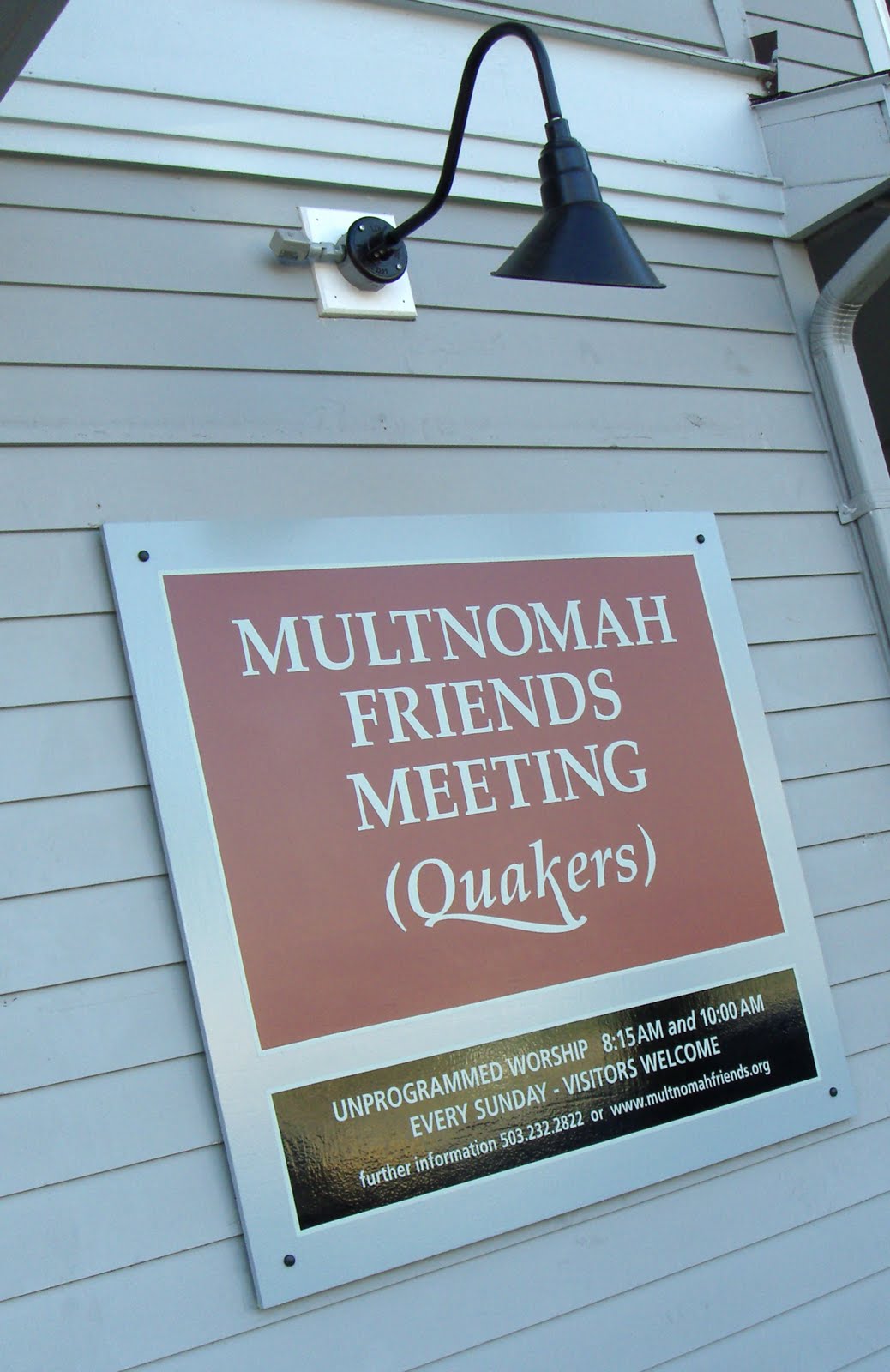
The memories and tributes about Simeon Hyde, Jr. enthralled, inspired and entertained us at his memorial service last Saturday. Our Quaker Meetinghouse's worship room was packed to its walls, and then some. Many attending were in the adjacent library listening intently to the distant stories and praise they could discern through the open double doors.

Sim died the day after Christmas at age 92.

Or I should say his body finally gave out.


At the memorial, Simeon Hyde’s spirit was strong. It remains so among us.

I joked the next day that we could have easily “pulled an all-nighter” in Sim’s memory. The sailing stories alone would have taken us past midnight. He was an intrepid recreational sailor before and after he was a young World War II naval officer whose aircraft carrier, The Wasp, was torpedoed and sunk.

Later he taught English for 23 years at Phillips Academy in Andover, Massachusetts, and at one point served as the acting headmaster.

Then Sim radically changed directions — a mid-sea correction — and become an architect. The wee hours of the memorial morning might would not have been enough time for stories of Simeon’s steering a major addition to our meetinghouse into being. In his late 80s, he pondered and prodded every detail. A stairwell banister was remade not once but twice before it got Sim's approval.

Then there was the water colorist who flourished in his later years. And the meticulous furniture craftsman. Samples of his work — including an exquisite wooden music stand — were on display in our social hall.

In our often undisciplined Quaker community, Sim brought order, leading the meeting’s Peace and Social Concerns Committee and the Worship and Ministry Committee. More than once he stiffened the backbone of a hesitant clerk, including this one.


The man was everywhere. And while throat cancer had stolen much of his voice, he pressed on, making his advice and wisdom known.

Frequently, he and I would literally huddle, me with my hearing problems straining to hear him. He with his ravaged, gravelly voice struggling to make his a point.


Given the memorial service’s rousing and at times rambling review of a life so vibrant, I confess I was grateful for the respite between Saturday’s memorial and Sunday’s worship.

Not surprisingly, the ministry about Sim resumed unabated when we reassembled for worship.
Overnight, perhaps in my dreamy subconscious, I distilled my affection and admiration for Simeon.

I must have met him when he was a teacher, for I was a student at Andover when he was there in the late '50s. He was well into his 30s and I was a raw teen. I never had a class from him, but some of my raucous friends lived in the dormitory where he and his wife, Ann, were house parents.

It wasn’t until I joined our Quaker meeting here in the late ‘90s that we became acquainted and grew to know each other. Someone, hearing of my prep school past, must have said, “Well, you must have known of Simeon Hyde. He’s over there. I’ll introduce you.”

I’m not particularly good with names, but “Simeon Hyde” is an exclamatory name not to be forgotten.

And so we greeted one another, and our lives intersected after decades.

He was in his 80s when we shook hands. His grip was a firm, enthusiastic clutch that cemented us.

I’ll spare you my own stories (unless you insist...) and simply say my distillation from Saturday's memorial to Sunday's worship came down to one word: passion.

Here was a passionate man. Passionate about life, about work, about our meeting, about our meetinghouse, about doing a job spot-on right, about his craft (including the sailing kind) and about his art.

On Sunday at meeting I stood to praise his passion. “Look at those paintings hung in our social hall downstairs,” a urged fellow Friends. Simeon Hyde's watercolors are landscapes of swirling, spirit-infused color. The autumn trees are whirlwinds of orange and yellow.

“Imagine Sim, passionate at his easel, passionate about the scene before him, passionate about brush and palate, passionate for the those with whom he would share the ... passion.”


On the memorial service’s program is a passage that Simeon must have chosen for the occasion. It speaks of man and spirit.

But oh! shipmates! on the starboard hand of every woe, there is a sure delight; and higher the top of that delight, than the bottom of the woe is deep. Is not the maintruck higher than the kelson is low? Delight is to him — a far, far upward, and inward delight — who against the proud gods and commodores of this earth, ever stands forth his own inexorable self.”
Herman Melville, Moby Dick

Labels: , , ,

Friday, September 23, 2011

A Quaker Sunday in a 'Year of Sundays'

Amanda Westmont and Joel Gunz are local, self-avowed secular, religious reporters who write an entertaining, irreverent blog titled “Year of Sundays.”

Their catchy motto is “We go to church so you don’t have to.”

And so they have gone — to a wide variety of congregations.

Eventually, the time would come for the couple and their children to visit our Quaker Meetinghouse on Stark Street. I’ve been looking forward to meeting them and learning what they might have to say about Multnomah Friends.

On August 7, they arrived at our door.

By chance, I welcomed them after they introduced themselves as the authors of "Year of Sundays.” A couple of us complimented them on their blog and its wry perspective.

I hoped they would find Quakers as intriguing and challenging as I do, even after nearly 50 years of attending “unprogrammed meetings.”

In lay terms, “unprogrammed” means we worship largely in silence and have no pastor or minister. There is not a “programmed” order of service. Much more can be found about unprogrammed Quakers HERE.

So what would these two affable, skeptical, secularists have to say about us after their visit? In mid-September, we found out.

Joel’s name appears on the post but my guess is that his impressions reflect Amanda’s as well.

I anticipated a review that might actually reflect the vitality of our meeting. For a congregation that avoids any kind of proselytizing, we are seeing astonishing growth, particularly among young people. The obvious journalistic question is “Why?”

But to ask the question, you’d have to be familiar with the history of the meeting, or at least ask, “What’s with your congregation these days?”

But Joel never asked.

In journalistic parlance, he “missed the story.”

In fairness to him and Amanda, it was understandable. Their purpose was to report on THEIR experience during a two-hour visit. The first hour was for silent worship (punctuated by spoken ministry); the second hour was for socializing.

What they detected, and reported on, was an unquestioning, even stifling, uniformity of liberal political correctness.

End of story.

I’ve seen this happen before. People seem to want to dismiss Quakers by putting them in some familiar bag. Unfortunately, we provide them with outward signs that help their cause.

I think the stereotyping also comes from the fact that, inwardly, we are scary. Quakers call on those who worship with us in silence to look within themselves. Oh-oh. You actually have to plumb unplumbed depths. You can either do it, or at least try to do it, or you can run from it.

That’s what Joel, using his glib prose, did. We Quakers simply became grist for the “Year of Sundays” mill.

What did I expect? What did I learn from Joel and Amanda’s visit?

I expected that they would see how unique we are. That we are “radically inclusive” — we are devout Christians, devout atheists and, yes, devout skeptical, pen-wielding secularists.

Rather than being unquestioning, as Joel portrayed us, our spiritual seeking is manifestly driven by questions. We call them “queries.” Each month we post one on two walls of the large, sky-lit room where we worship. Did Joel and Amanda notice? Examples: “How do we exercise our respect for the balance of nature?” and “Do we center our lives in the awareness of the presence of God so that all things take their rightful place?” and “Do we keep to a single standard of truth so that we are free from the use of judicial and other oaths?”

Three centuries ago in England, Quakers were considered a “Dangerous People.” Many Friends share the belief that, in today’s wayward society, we still must be a “Dangerous People” — “dangerous” to injustice, inequality, deceit, consumerism and the destruction of the planet.

At the very least, to folks like Joel and Amanda, we should seem, if not “dangerous,” curiously, strikingly challenging.

Apparently not.

If Joel is right and we are simply predictably liberal and politically correct, we have failed to be true to our tradition and our callings.

Clearly in the case of Joel and Amanda, we failed to convey who we are and what it means to be a Quaker.

We have work to do.

Labels: , , , , ,

Monday, September 19, 2011

Nicaragua: land of determination, poverty and joy


Josh von Kuster is an occasional contributor to The Red Electric. Here is his report of a recent trip to Nicaragua as part of a delegation from our Quaker meeting.

By Josh von Kuster

You take three flights from Portland, spanning 13 hours and finally touch down at Augusto C. Sandino International Airport in Managua, just before 9 p.m. local time. Right on schedule. You grab your bags emerging from a fog of coach-class dozing and make your way to the front exit door.

And it hits you.

The tropics bombard you with humidity, heat, closeness and life: a constant presence for the duration of your 11 days here in the poorest country on the American mainland. The sun rises and sets, the rain comes and goes, the birds, frogs, insects and assorted other fauna share the rhythm. The tropicality remains ever-present.

Clearing customs comes with foreboding for gringos. Perhaps due to too many Hollywood portrayals, you have visions of prison guards interrogating you in Spanish in a decrepit stucco jail. Occasionally you are greeted by alluring young locals with flowers and rum drinks. Tonight, you are simply asked to pay the $10 entry fee and are waved on into the country.

You then pile into the short-bus, bound for Ciudad Sandino and the Center for Development in Central America by way of the Pan-American highway. The trip has very few delays thanks in large part to the numerous roundabouts. The ride is fairly uneventful except for the police pick-up hurtling down the road bearing men in and out of uniform standing in the truck's bed. Transportation of all kinds is communal in this country.

The bus turns off the highway onto a side boulevard by way of a U-turn and a hard-right. The street is cobbled and bumpy but far superior to the unimproved driveway up a steep bank leading to the Center. It is a concrete walled compound guarded by members of the security company required to comply with international trade conventions (thank you CAFTA).

The Center’s staff welcomes you as you disembark, and you give your thanks to Chico for the safe, speedy journey. The greeting is brief as you’re exhausted despite sleeping on all the flights. Soon you collapse on your top bunk under two fans, naively optimistic that the sweating will soon stop.

In the morning, you awake to the reality that you are indeed in a Third World country. The bathroom comes equipped with trash bins next to all the toilets with prominent placards requesting you to put your toilet paper in said bin rather than the toilet as it causes the septic system to back up. In case the point wasn’t clear enough, another placard at the door on the way out invites you to return to the toilet and fish out the offending paper with your hands if need be (and then wash your hands “really really well”).

Now the best part begins: superior coffee grown less than 100 miles distant and roasted even closer. Despite its being ground days in advance and its plastic brewer, the coffee’s rich flavor cannot be vanquished. And gallo pinto (pronounced GUY-o PEEN-toe, meaning “speckled rooster”), the national dish, accompanies two meals a day, everyday.

Following breakfast, you discover what blue collar life was like before automation and the assembly line. Your job is to make adoquines (ah-doe-KEY-nays), or paving stones, to improve the driveway. You will become intimately familiar with the pavers over the next week.You soon meet Pedro “the Baptist,” who presides over every step of the process like a masonry maestro.

It is a fairly simple process: mix concrete, pour and then pack it into a steel mould, then stack the formed stones allowing them to set. The trouble is, it’s all by hand. And Pedro is not easily impressed by your exertions, having for years overseen similar projects with countless volunteer teams, including aspiring civil engineers.

The critical step in the adoquine process is wetting the concrete just enough to be able to form it easily into the mould. Pedro expertly and entertainingly sprinkles water over the pile of concrete mix as if he were a priest baptizing a Catholic babe in arms. He blesses each paving stone before it is even formed.

This is life in Nicaragua: arduous labor which you must enjoy or go crazy. You are fueled by rice and beans.

Thanks in large part to the introduction of highly processed foods, you see a number of obese people as do your colleagues at the clinic in Nueva Vida. The refined food is available at the numerous pulperias (octopus shops) or convenience shops run out of residences. The children are often skinny, some showing the reddened hair indicative of kwashiorkor, chronic protein deficiency.

Yet you are not so aware of the problems with society in Nicaragua as you are of the happiness and determination of the people. Through horrendous living and working conditions, the people remain happy and jovial. On the occasions when you get the opportunity to converse with the residents, they all seem alert and aware. They are informed of the futility of the political process (the father of the 1979 revolution is now establishing himself as an autocrat). They know the great odds against their situation improving either personally or nationally.

Surprisingly, greed is absent in clearly defined personal spaces. Every home has a structural perimeter ranging from substantial concrete walls to a flimsy piece of string. But all is shared; that which is lent is returned. Compliment someone’s ear rings and they become yours as part of an exchange of gifts.

Surely the people here do enjoy life. Sara is a member of the Genesis Spinning Cooperative which has been her life for the past 4 1/2 years of unpaid labor. She has seen her hopes of a good job with friends-come-family dashed repeatedly in that time, yet her smile is still as broad as lake Managua.

Pedro struggles to feed a family of 7 on his reliable but meagre income from CDCA but is quick with a joke and brings a majesty to his work.

The scores of children you meet at the national landfill laugh and fight and play and bounce as much as any you have ever met, despite living in and surviving off of the largest dump in central America. Everyone you meet loves their community and works hard with and for each other.

In Nicaragua, the human spirit triumphs over poverty. Along the dirt streets with open storm- and gray-water sewage in front of homes, laughing Nicas sit in the shade on their porches and wave at the passers-by.

We, with our fiber-optic internet and wireless clouds and high-definition, 3D tv’s and glass-smooth asphalt, have paid the price of lost companionship. Walk down the streets of the world's most opulent country and you never see a soul.

After 11 days, your experience comes to an end. You feel this Nica world escaping you as you walk through Augustino C. Sandino airport, with its duty-free shops and manequin-like sales women. As you board the Continental flight, the artificiality of western life welcomes you back with air conditioning.

Josh von Kuster is a Christian Quaker attending Multnomah Friends Meeting. Having completed a 10 years as a Navy pilot, he is pursuing a career in nursing and transnational community development.

Labels: , , , , ,

Saturday, August 27, 2011

The Gospel Truth?

We have a lively discussion group at our Quaker meetinghouse early Sunday mornings.

The leader of tomorrow's discussion sent out his ideas about the scheduled discussion topic. I thought you might find them interesting and even challenging.

The topic is:

“What Did Jesus Say
and What Does That Mean to Me?”


Jesus did not say many things we assume he said, and he said many other things people have found convenient to ignore.

He did not say he was God, nor that people should start a new religion in his name, nor that abortion or homosexuality were bad.

He did say that the meek and the peacemakers were his favorite people; that if a man hits you, do not defend yourself; and that you must love and honor those who mistreat you.

I would like us to discuss what Jesus said, and then I would like each one of you to state what Jesus’s message means to you. To get things started, this is what it means to me:

I believe Jesus said far more about social change than what little is stated in the Sermon on the Mount and elsewhere in the New Testament. I believe that is why he was murdered. I believe he was a real troublemaker, in the very best sense of the word, and that separates him from Confucius, The Buddha, Mohammed, Krishna, Moses, and the rest who started a major religion.

My reading of history is that the founders of religions, with the clear exception of Jesus, have generally tended to get along relatively well with existing civil authority. At least, they didn’t get themselves crucified. That is because none of them, except Jesus, declared that existing society was corrupt top to bottom and needed to be first ignored and then changed.

I believe the rest of them said, “Change yourself, one convert at a time, and eventually the world will change, too.” The civil authorities will accept that kind of change.

But Jesus proposed instead the Law of Upside Down, and for that, they killed him.

This is what I believe Jesus actually said in the Sermon on the Mount:

“You have heard it said, that you shall love your friend and hate your enemy. But I say to you, that you shall love your friend and also your enemy. You shall love him who hates you. You shall speak kindly of him who defames you. You shall help him who has tried to injure you. For if you love only him who loves you back, do not the Romans and (Re)publicans the same? How are you any better than they are? What have you learned following me?

“And if a man hits you, turn your cheek, so that he may hit you again. For if you take revenge for every wrong, do not the Romans and (Re)publicans the same? How are you any better than they are? What have you learned following me?”

So far, so good. You’ve heard the above 10,000 times. What follows is the part you haven’t heard, and this is what got him killed.

“You men are as obvious as dogs. You grow up, but you never grow wise. Every one of you wants to sleep with the prettiest girl in the room, and you mock her ugly sister. Every one of you honors the hero, and you laugh at the terrible toils of the common laborer.

"Every one of you exalts the rich man and pretends that he is wise, while you ignore the poor man and pretend he has nothing to say. Every one of you wants to be praised and recognized as some sort of great man, while you refuse to praise and recognize the greatness of others that is all around you.

"You middle-aged men will jump up out of your chairs to help a pretty young woman open a door, even though she has no need of your help. But let an ugly old woman need a door opened, and you sit on your behinds. She must fend for herself. And it is she who needs you.

“I say to you, turn it all upside down. Seek the ugly maiden’s favors, and she will weep for joy that you noticed her. She may also be ten times sexier, ten times kinder, ten times smarter, and ten times more likely to care about you and your future, than her pretty sister.

"Honor the common man, not the hero. The hero has more honors already than he can count. Ignore him, and seek out that man whose work is dangerous and underpaid, and make him your new hero.

"Ignore the rich man. He already has more so-called 'friends' than he can count, because of his money. He has no need of your friendship. Give it instead to the poor man, and ask for his opinions on the issues of the day. His wisdom will surprise you.

"Do not seek promotions, awards, medals, and honors. Seek instead to follow the examples of the ordinary people around you, and praise them for their works. If you watch them closely, you will find much to praise.

"Start living your lives the opposite of how you lived them before. Stop believing that you must cooperate with authority, or that you must be what your parents or teachers wanted you to be.

"Stop helping the existing order to crush our spirits. Stop continuing to do all those things that have made us so miserable for so many generations.

"Start living Upside Down."

The logical conclusion of such a message is a powerful challenge to secular and religious authority. It says that everything is open to scrutiny, to see if it does what it claims to do. It says that nothing is sacred, except treating people right. Ultimately, it says that no person has to right to tell any other person what is right or wrong or what one must do.

Today, in a liberal democracy, you might be able to get away with that kind of preaching. In 33 AD, it was treason.

So that’s what I think Jesus said. What do you think?

Labels: , , , ,